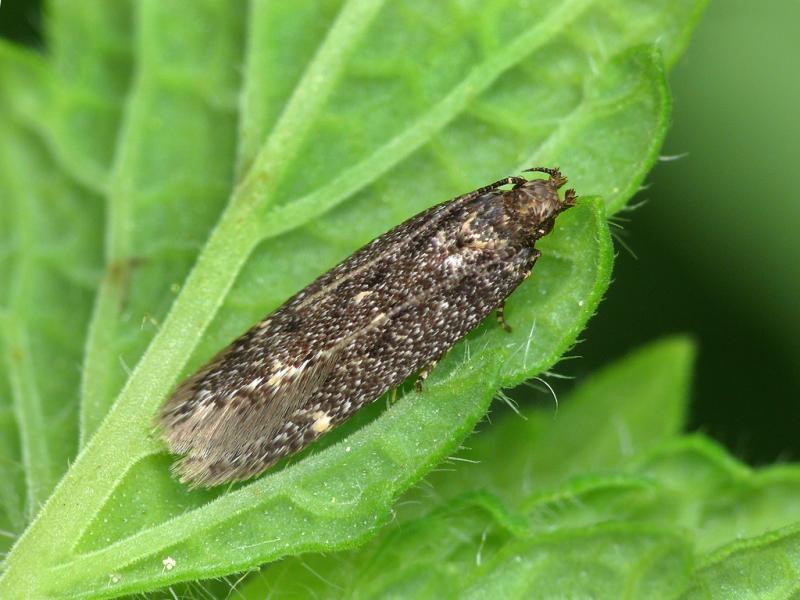
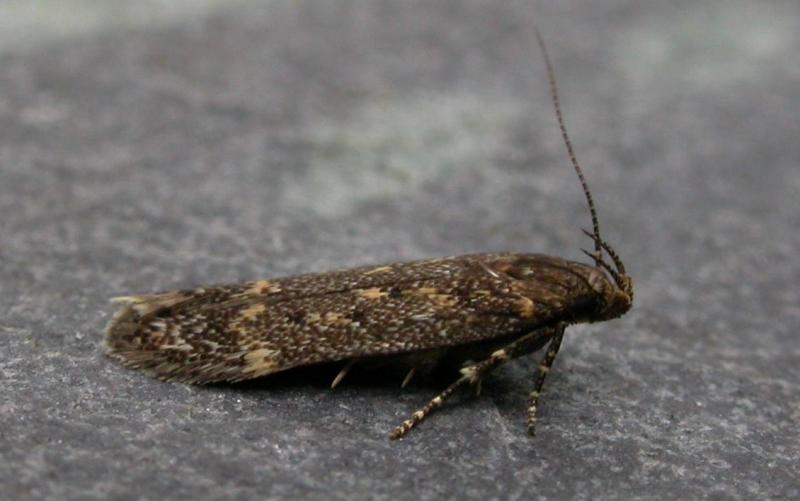
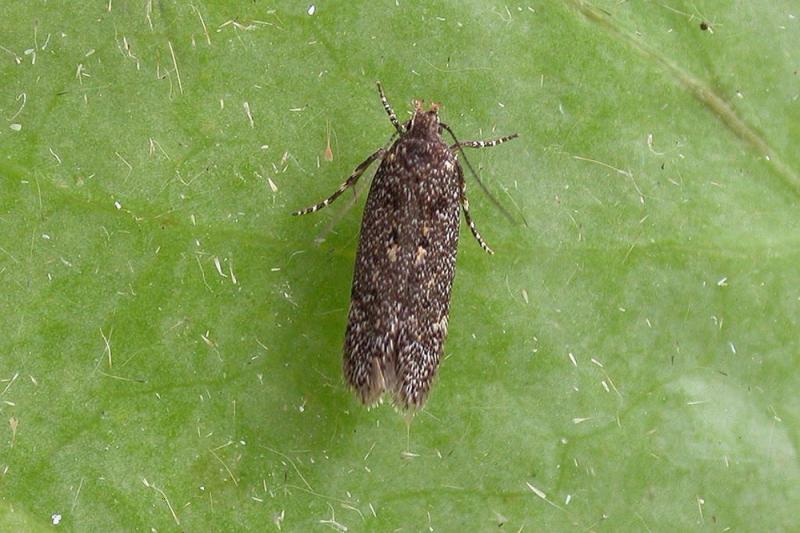
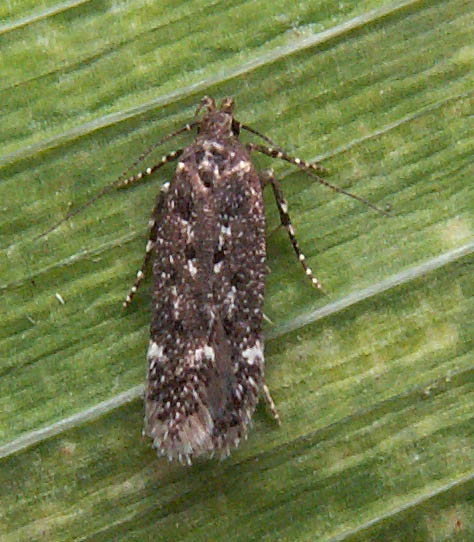
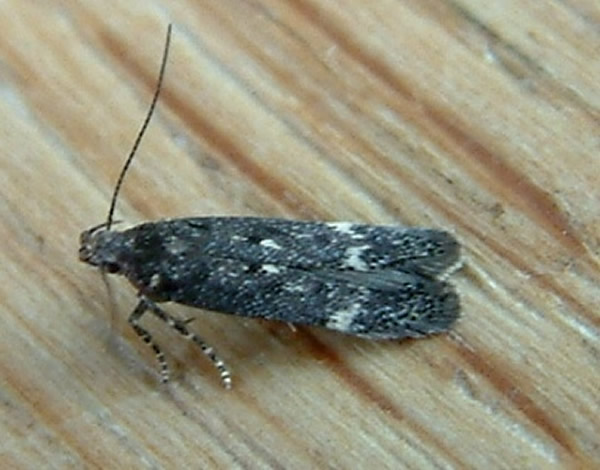
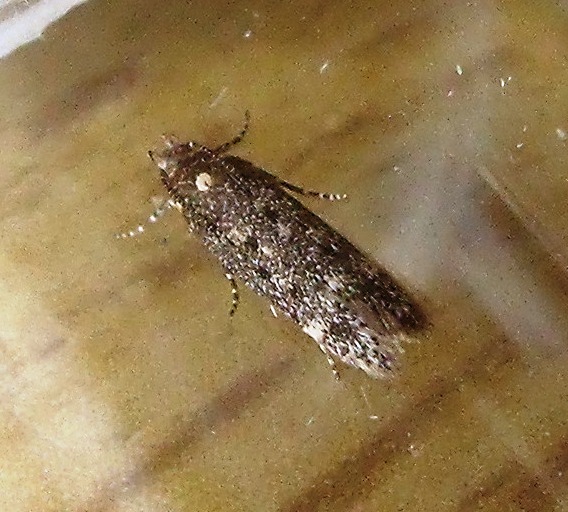
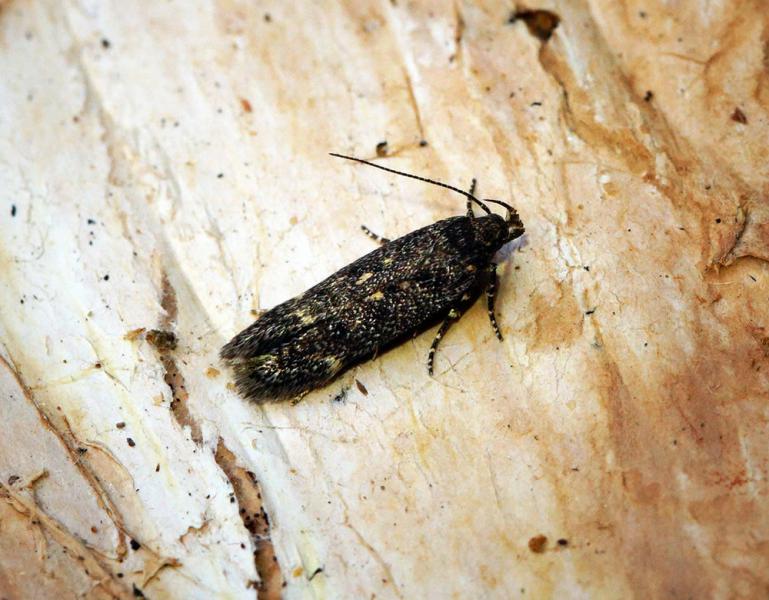
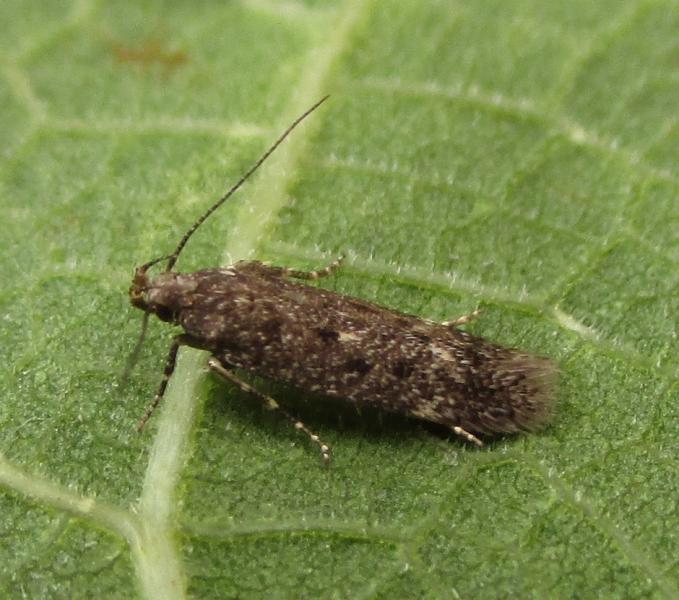
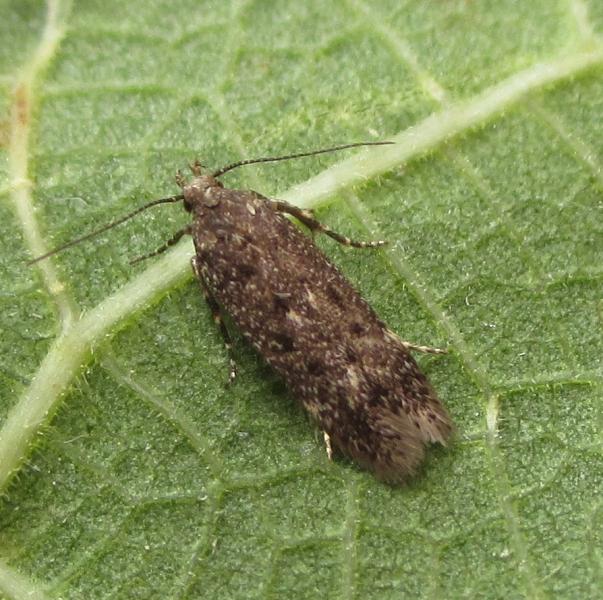
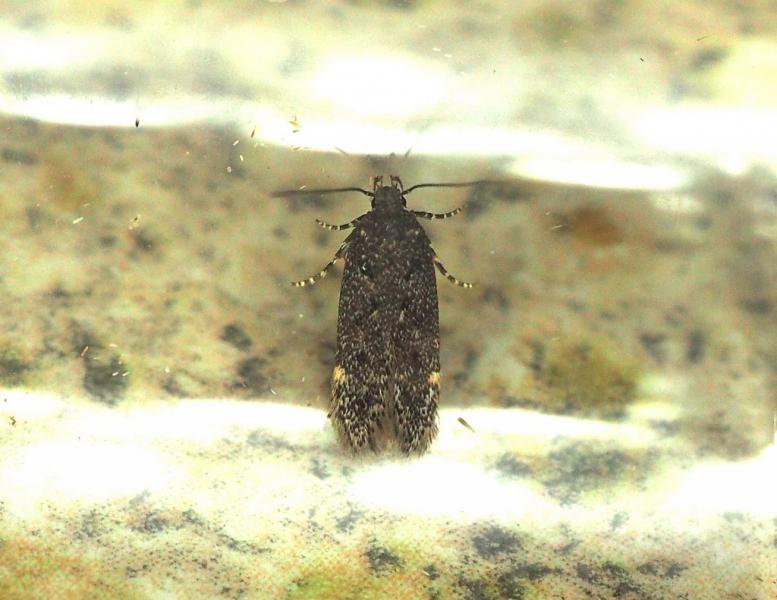
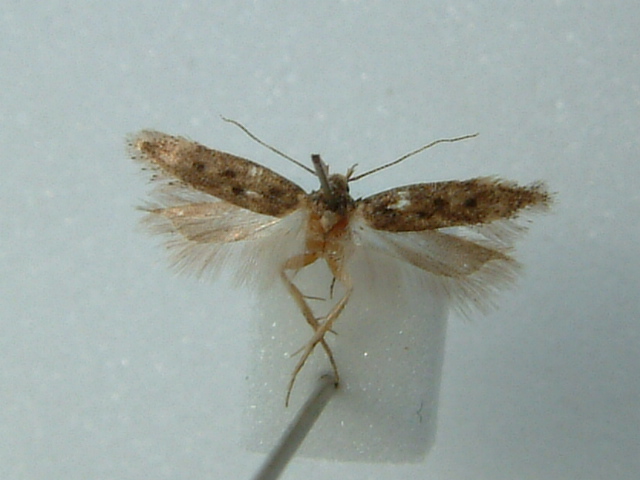
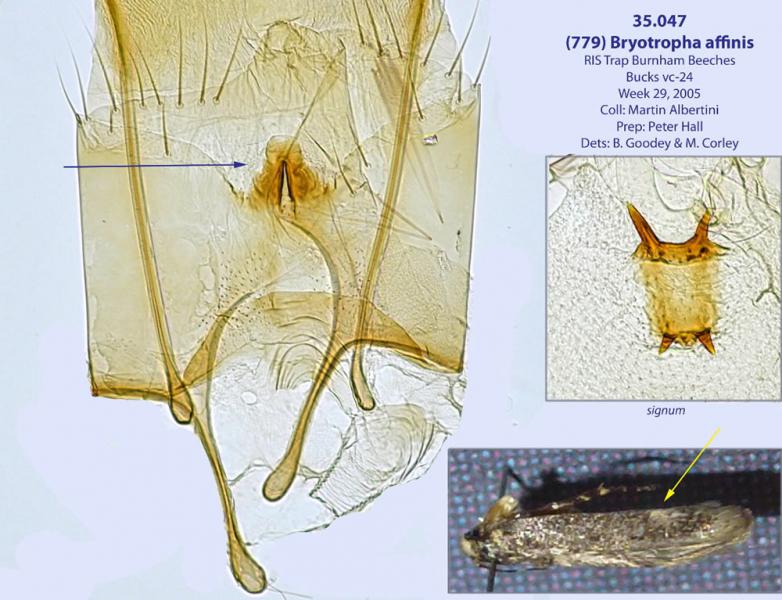
The pale yellowish-white (occasionally pale orangy-brown) speckling over much of the forewing (particularly between the black spots in the centre of the forewing) and the similar coloured costal and tornal spots (sometimes joined to form an angled fascia) contrasting with the blackish ground colour are diagnostic. Paler specimens of B. affinis have been reported from some coastal areas. In those which are almost completely ochreous the paler speckling mentioned above is not discernable, however the blackish plical and discal spots are then quite distinct. It is the most widespread of the smaller Bryotropha.
Worn moths lacking the pale speckling or occasional darker marked specimens may require dissection to separate from:
B. umbrosella where any spotting is pure white and more limited in distribution.
B. similis which is a grey-brown to dark shiny blackish brown colour with any pale spotting indistinct, scattered and mostly restricted to the inner half of the forewing, although the pale tornal and costal spots can be quite prominent in some specimens. B. similis has a pale base to the front of the face, not always present in B. affinis.
B. senectella darker forms of which might be confused with faintly marked or worn B. affinis but lack any hint of whitish yellow scaling around the central black spots. Generally B. affinis has a darker top to the head which is creamy in senectella with a line or band of sometimes indistinct darker colour in the centre. This head band varies in width and intensity and is best not used as a single identification feature particularly, as on occasions, B. affinis can have a paler colour to the top of the head.