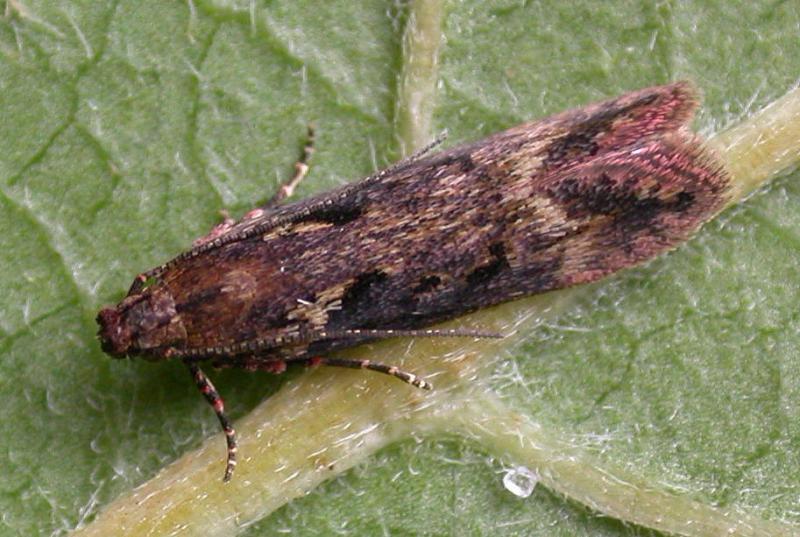
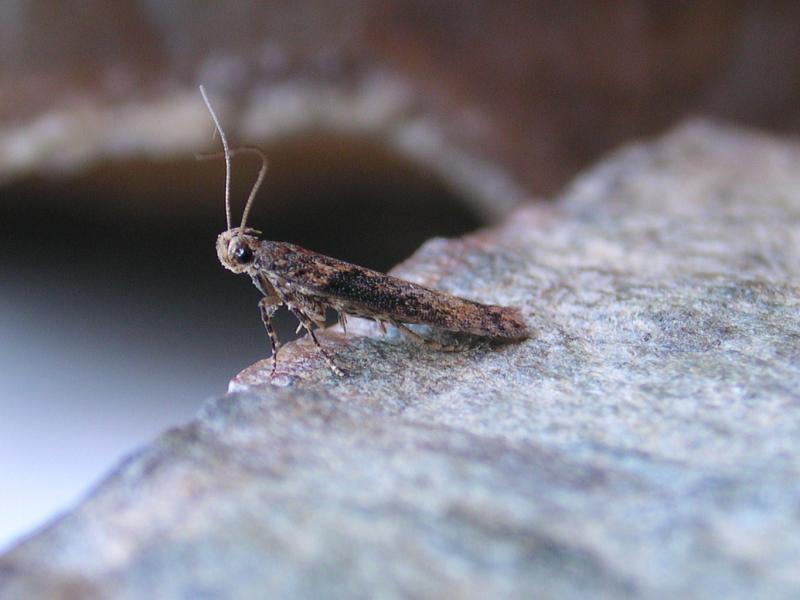
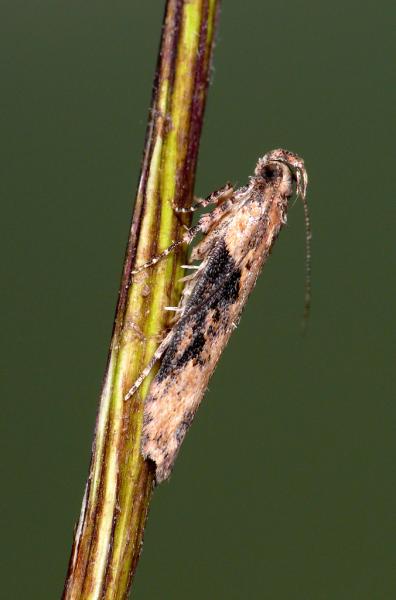
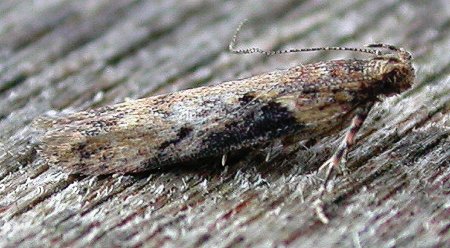
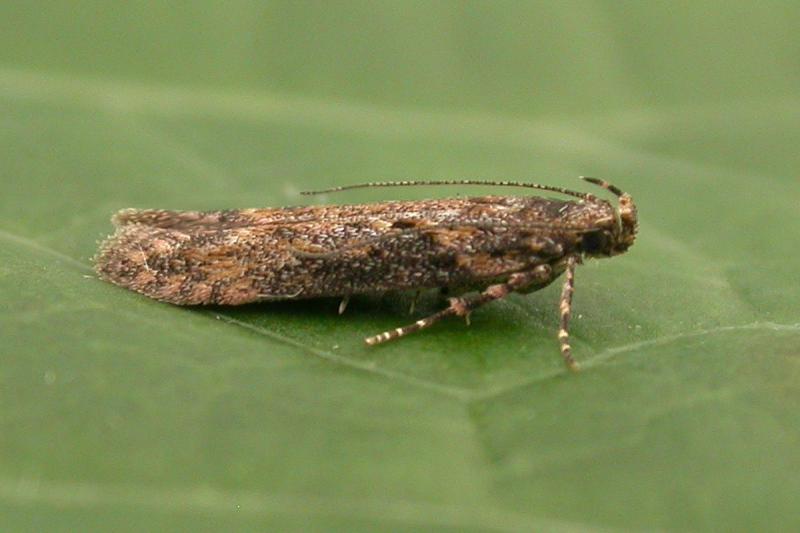
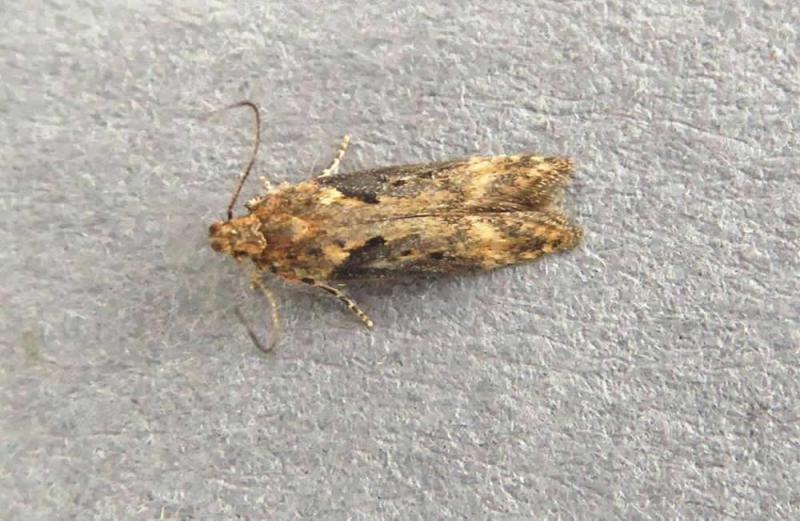
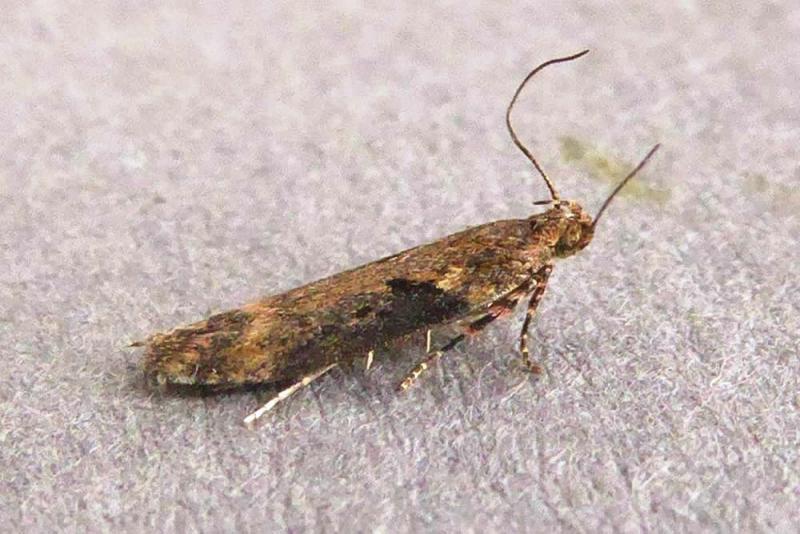
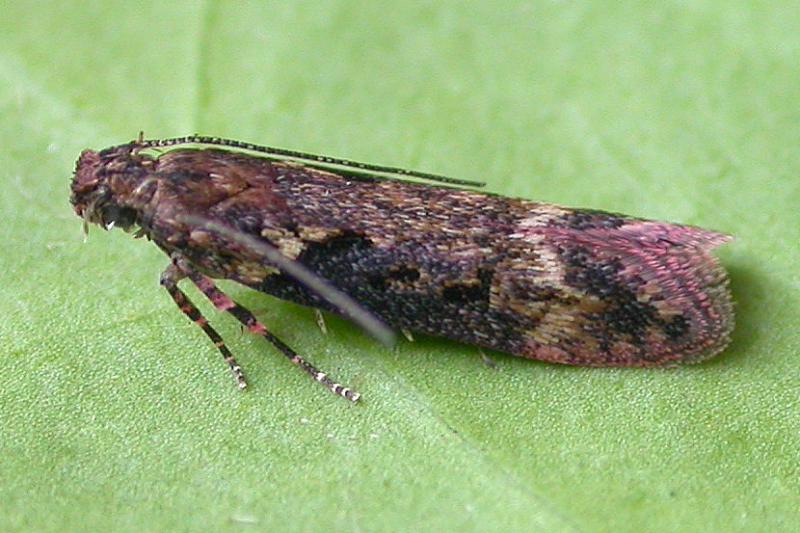
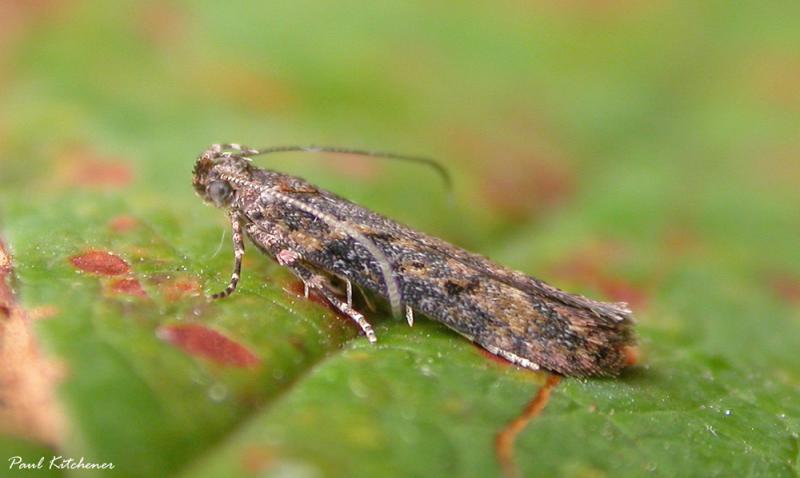
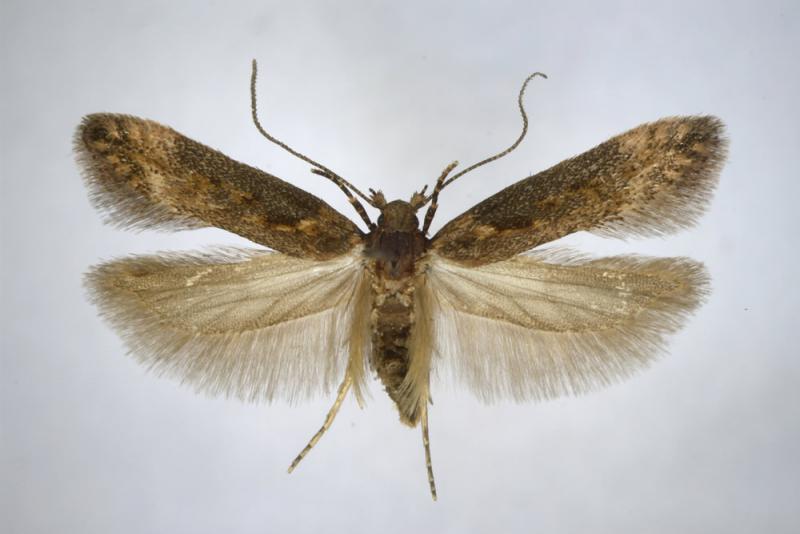
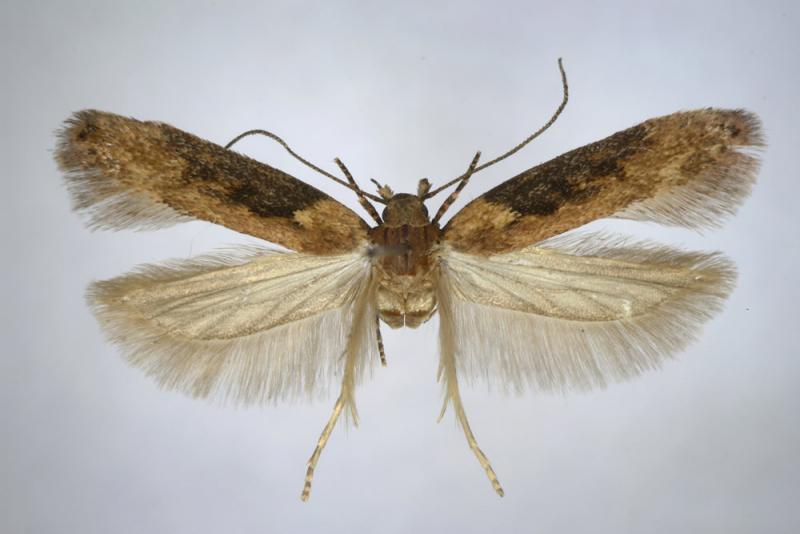
The large dark fuscous to blackish subtriangular marking along the costa (leading edge) of the forewing is only otherwise found in the much larger and paler Hypatima rhomboidella. On occasions this dark marking, although still just about visible, can be obscured or almost absent and if there is any doubt then dissection is recommended.
In Europe, there is a similar species (Scrobipalpa hyoscyamella). This is generally paler, the costal triangle just reaching halfway down to the dorsum (two thirds in S. costella) and lacks any pink scales on the forewing. The costal triangle is more diffuse toward the termen in S.costella. The larva of S. hyoscyamella feeds on Hyoscyamus (henbane), an introduced plant found quite widely in southern and eastern England, and has also been found on bittersweet. This species has been reported (it is believed incorrectly) from Jersey in the 19th century and should this species be suspected a specimen should be retained and a dissection carried out.
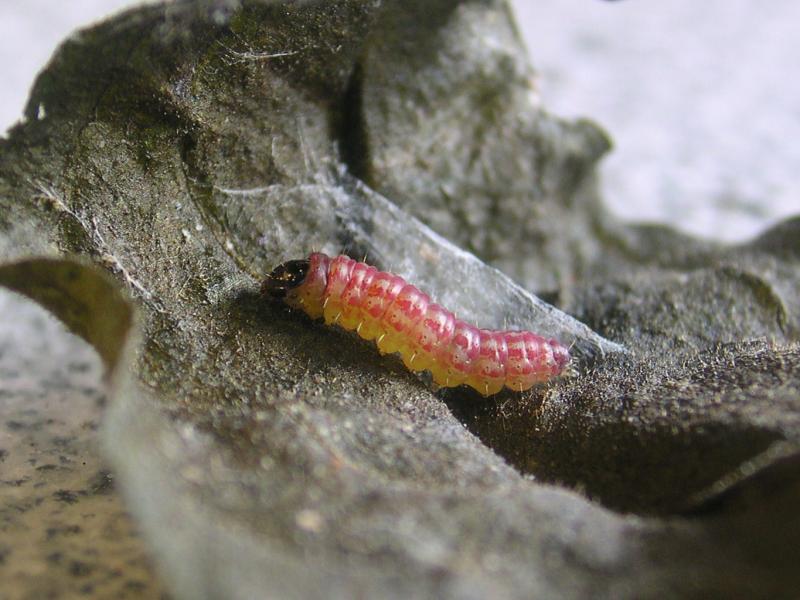
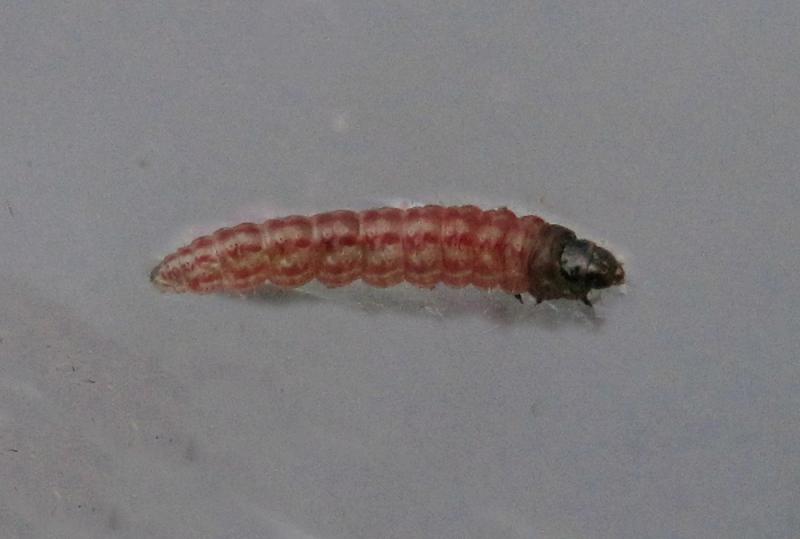
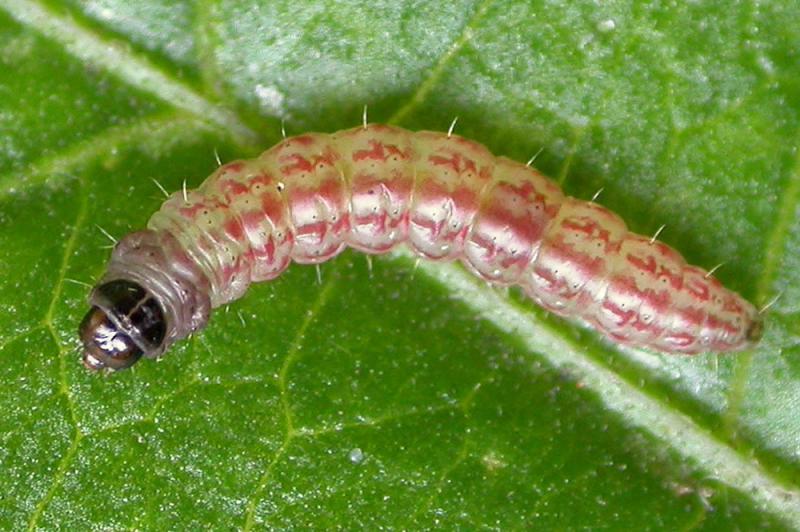
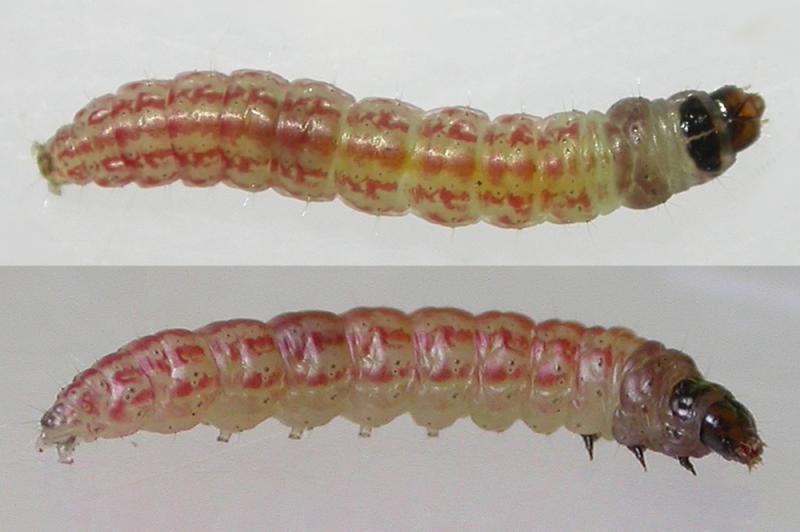
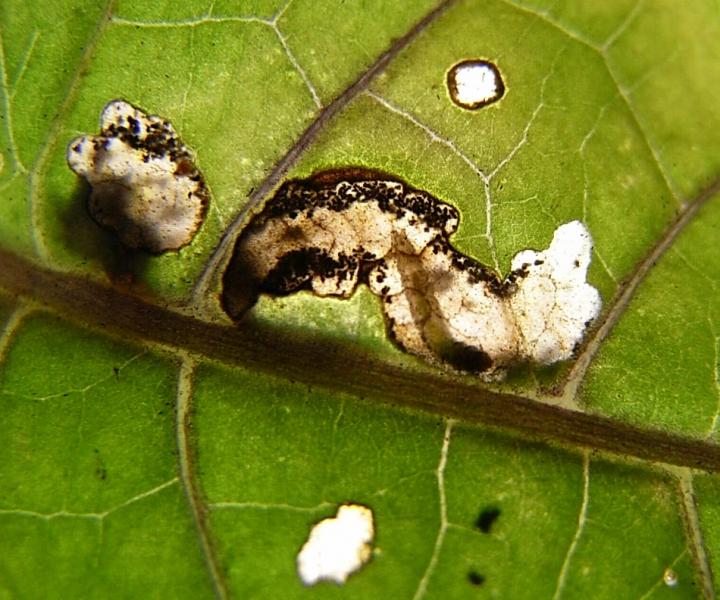
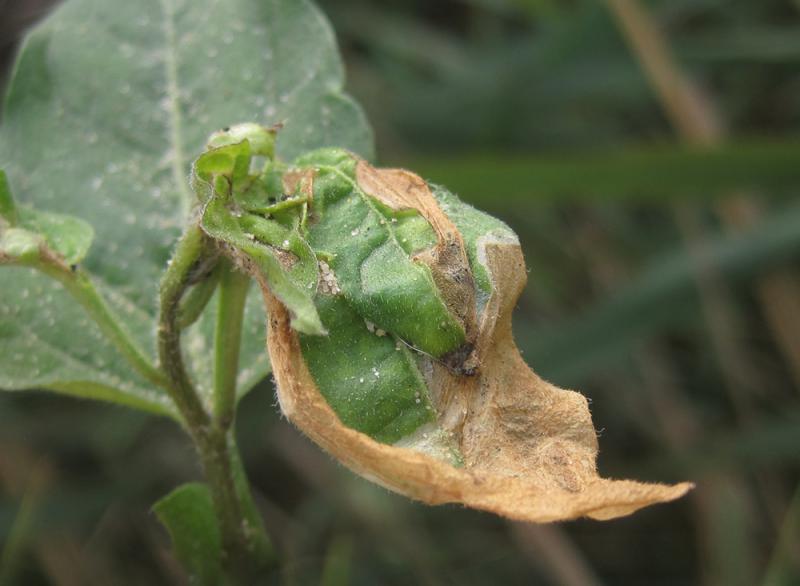
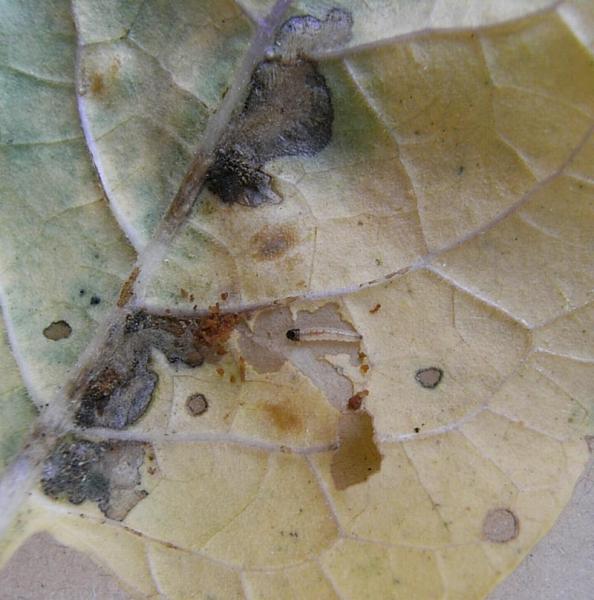
Acrolepia autumnitella also mine bittersweet, the larva being whitish with a pale pink head as opposed to the blackish head and prothoracic plate of S. costella. The mines of A. autumnitella can be viewed at http://www.leafmines.co.uk/html/Lepidoptera/A.autumnitella.htm
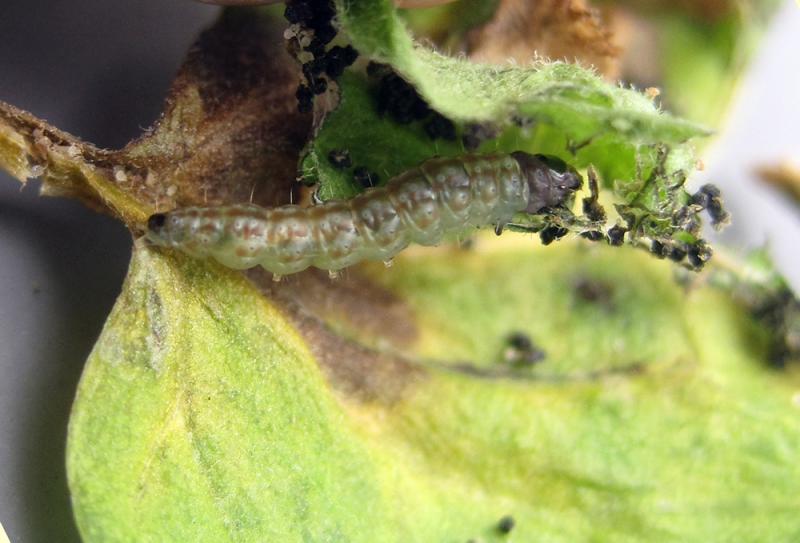
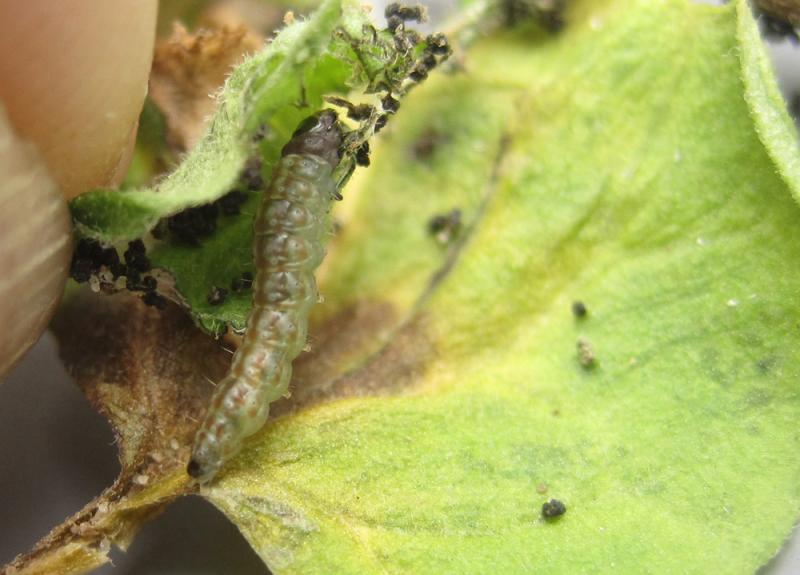
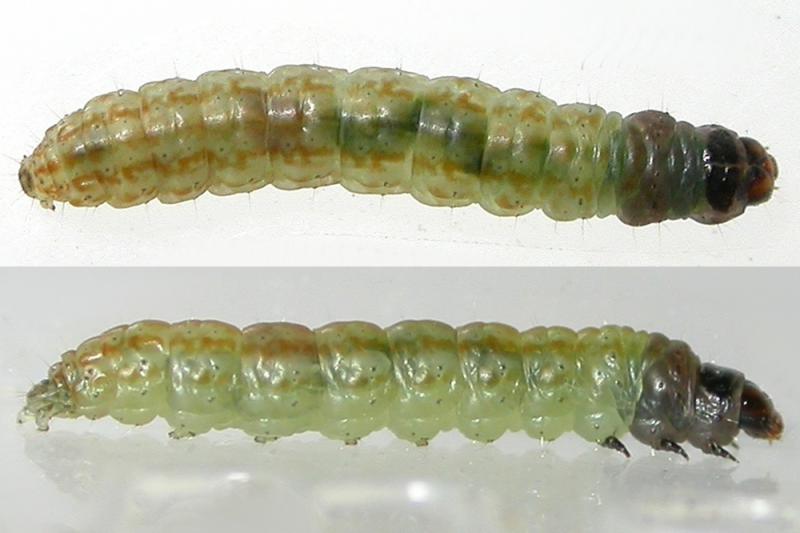
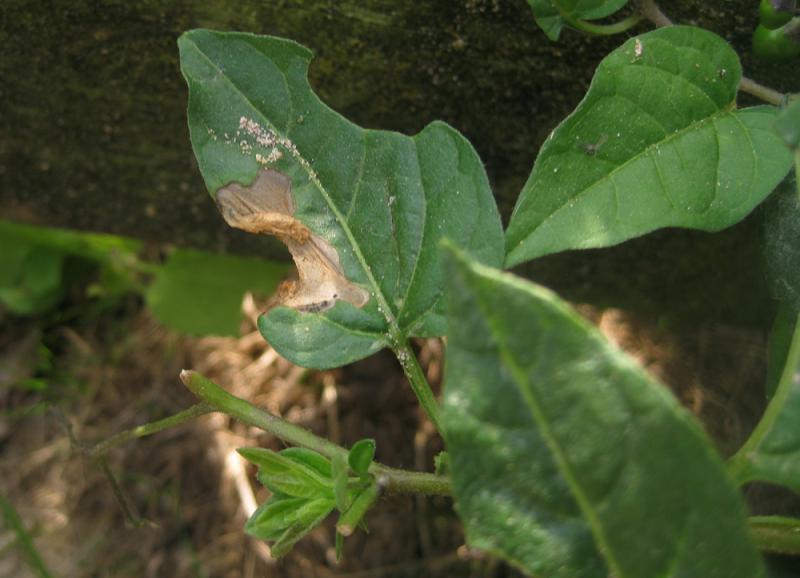
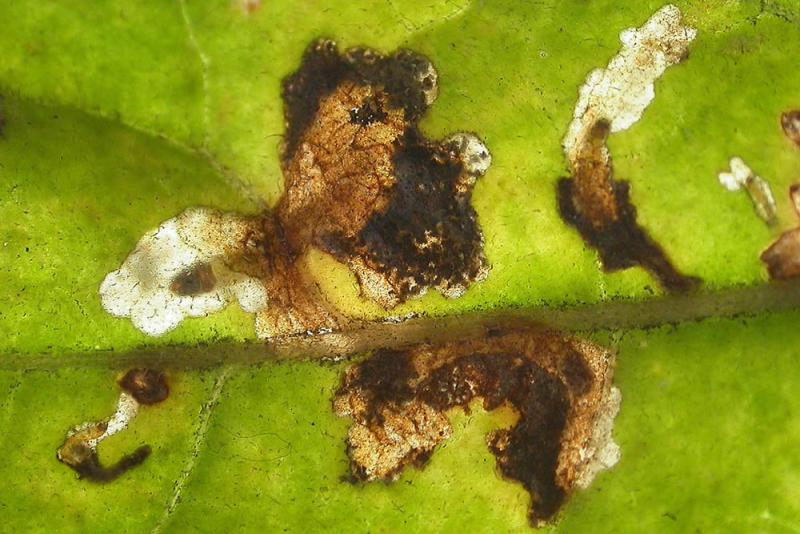
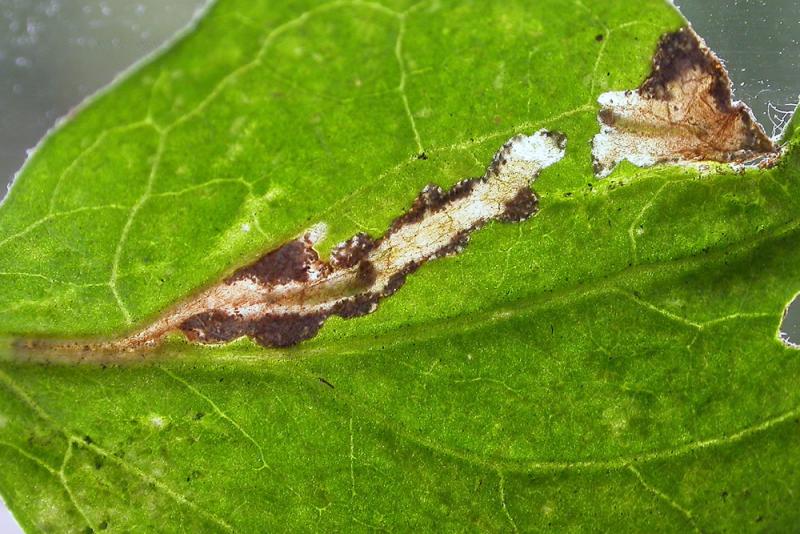
The larva of Tuta absoluta, although primarily a pest on tomatoes, is known to feed on occasions as a leaf-miner in various members of the Solanaceae in Europe. Now this species is becoming more widespread in southern and eastern Britain this should be borne in mind when recording S. costella larval feeding signs. Where the larva is present, that of S. costella has segments two and three (the area behind the broad blackish prothoracic plate) a dull purplish brown colour. In T. absoluta this area is yellowish to pale green beyond the narrower black plate, while Acrolepia autumnitella, another species that feeds on Solanaceae, lacks the black pro-thoracic plate.